What Is Regression Testing and Why Does It Keep Breaking at the API Layer
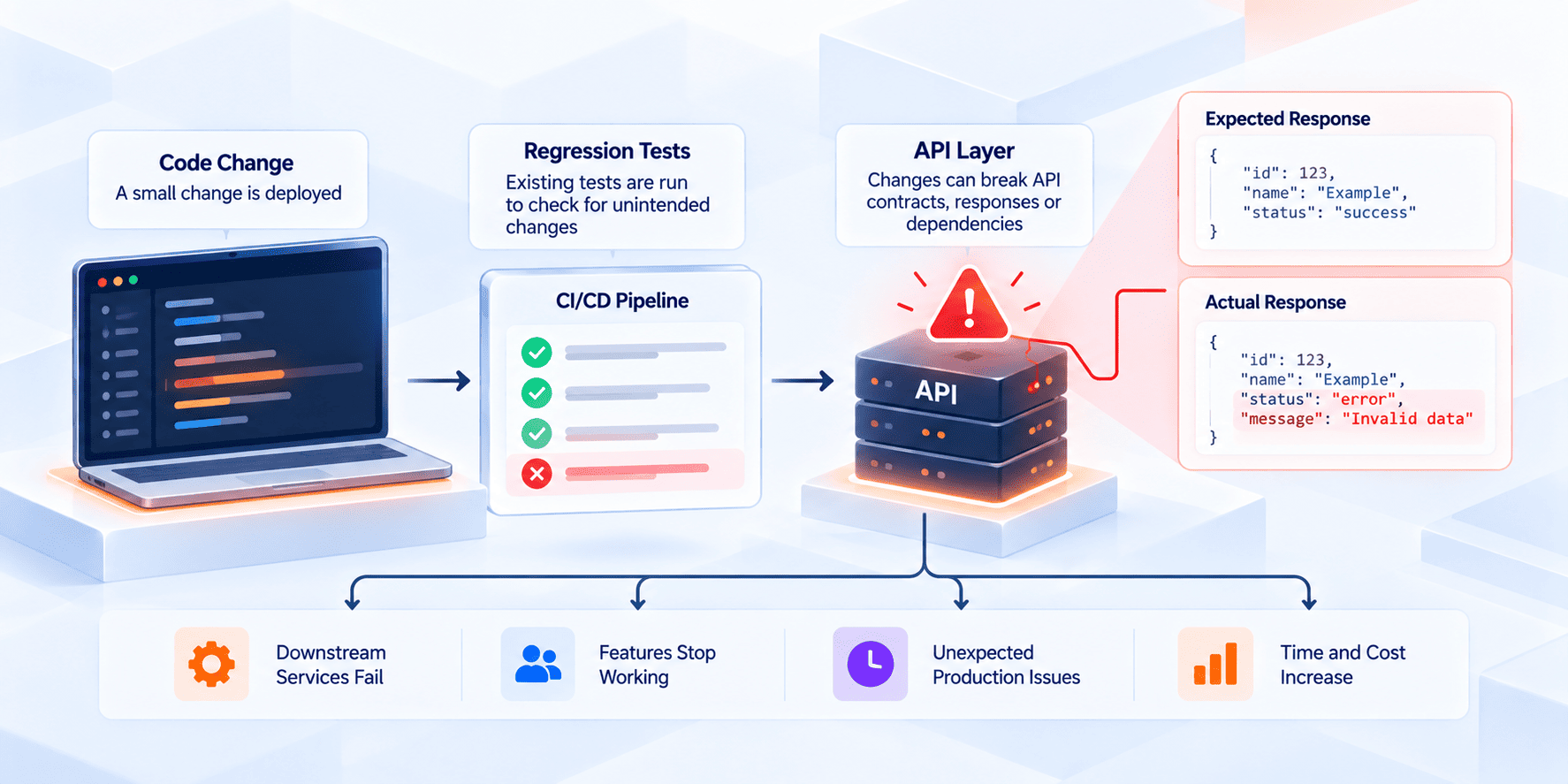
Regression testing has a simple job: confirm that changes to a codebase didn't break something that was working before. In theory, a green regression suite before a deploy means the system is behaving as expected. In practice, teams run into a specific failure mode at the API layer where the suite stays green while something in production is quietly broken.
Understanding why that happens requires looking at what regression testing is actually checking, and what it isn't.
The basic idea
When a developer ships a change, regression testing reruns a defined set of checks against the system to catch unintended side effects. A bug fix shouldn't break an unrelated feature. A refactor shouldn't change observable behavior. A dependency upgrade shouldn't alter how the application handles responses from external services.
The methodology predates modern distributed systems by decades. It was designed for a world where the software under test was largely self-contained. A desktop application, a library, a standalone service with well-defined inputs and outputs. Run the tests, get results, ship or don't.
That model breaks down when the application depends on external APIs that the team doesn't control, can't hit in CI, and that change on schedules nobody announces downstream.
Why the API layer is where regression testing struggles
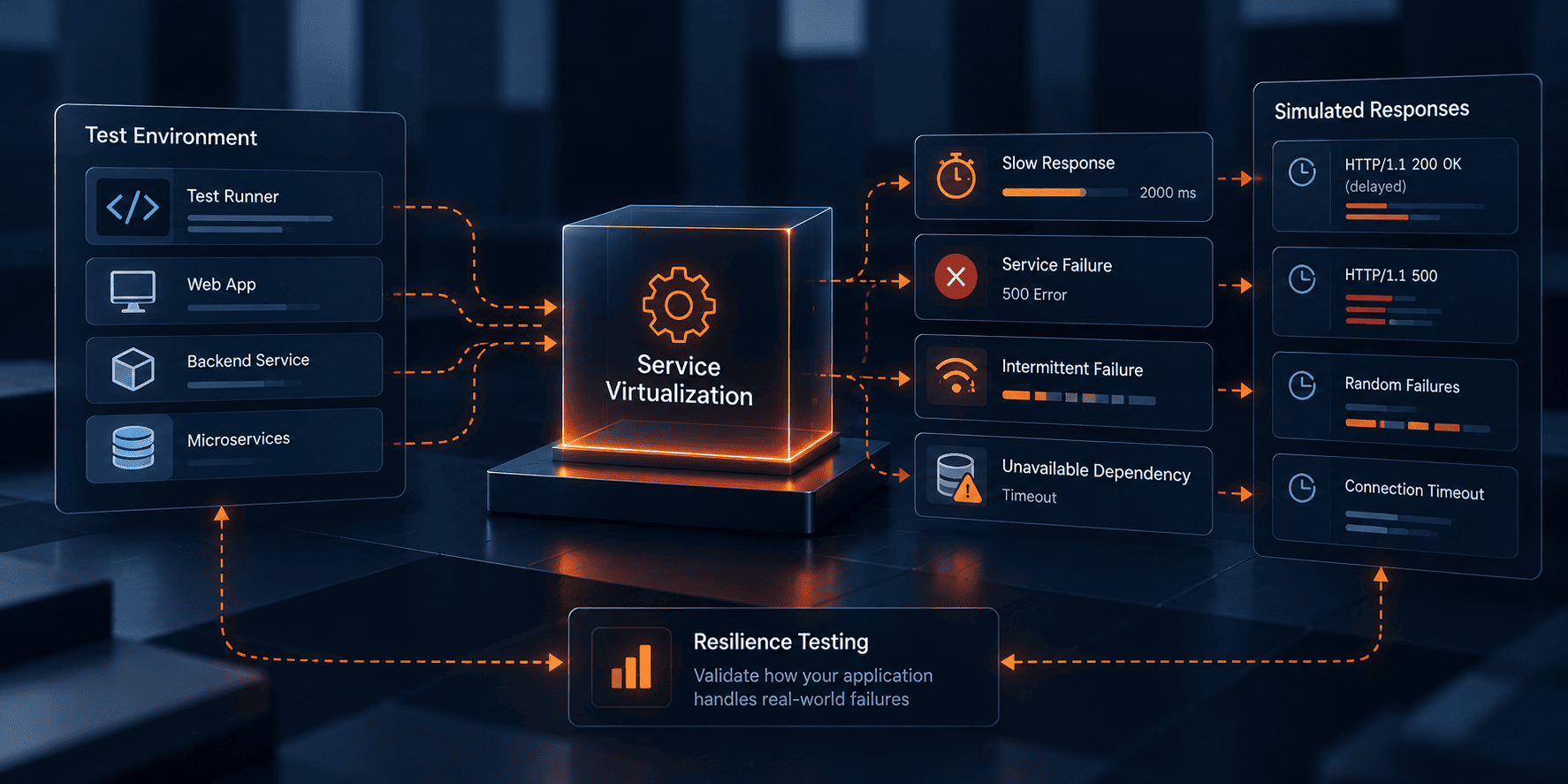
Every application talking to external services needs some simulation of those services during test runs. You can't hit a live payment gateway on every pull request. A mock goes in, a stub that returns a predefined response when the application calls that endpoint.
The mock gets written once, usually from documentation or from what the API was returning when someone last looked at it. It goes into the codebase. Tests run against it. The mock passes review and mostly gets forgotten.
Meanwhile the external service keeps shipping. Fields get renamed. Error response formats change. New required headers appear. Deprecations land. None of this gets announced to every downstream consumer. The mock doesn't know. The regression suite keeps running against the old response format, keeps passing, and keeps not catching the actual behavior of the dependency the application is running against in production.
This is why regression testing breaks at the API layer. It's not that the tests are wrong. It's that the thing the tests are validating against has decoupled from reality.
The noise problem compounds it
Even before the staleness issue kicks in, there's another problem: non-deterministic fields in API responses. Timestamps. Request IDs. Session tokens. Correlation headers that rotate per call.
If the regression test asserts on these fields, it fails on every run for reasons that have nothing to do with whether the application is working correctly. Teams hit this early and either write custom logic in each test to ignore those fields or, more commonly, start treating certain failure patterns as expected noise. The mental model shifts from "a failure means something is wrong" to "most failures are probably the timestamp thing again."
Once that shift happens, a real regression arriving in the same failure feed gets missed. Not because the suite didn't catch it. Because the team stopped trusting the suite.
What actually fixes it
Stale simulations and noisy assertions both have solutions, but they require the tooling to handle them rather than patching around them test by test.
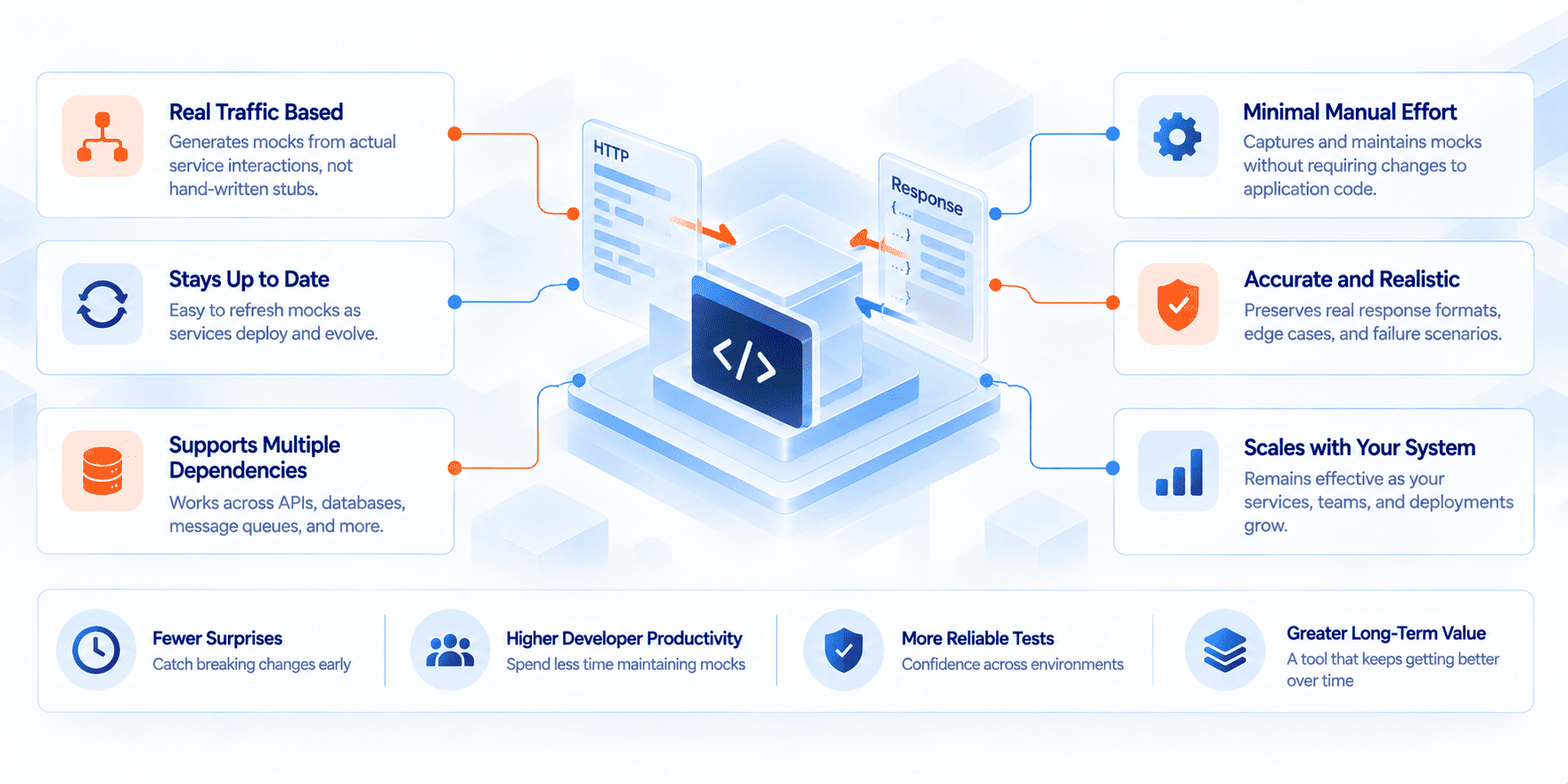
For simulation staleness, the fix is generating mocks from observed real traffic rather than authoring them from documentation. If the simulation is built from what the API actually returned during a recording session against a real or staging environment, it starts accurate. When the upstream changes, re-recording produces a diff that shows exactly what shifted. That review step happens before the test suite runs against stale assumptions, not after production surfaces the problem.
Keploy does this by recording HTTP and database traffic at the network layer using eBPF on Linux, without requiring any code changes inside the service under test. Tests and dependency mocks get generated from the recorded traffic. When something upstream changes, re-recording against staging takes minutes and produces a readable diff.
For non-deterministic fields, the fix is automatic detection and exclusion at the tool level. Volatile fields like timestamps and request IDs should be identified and skipped during assertion without requiring a developer to add that logic to every test individually.
Both of these are tooling problems, not process problems. A team with good process but tooling that requires manual mock maintenance and manual non-determinism handling will still accumulate drift and noise over time. The maintenance burden scales with how often upstreams change, which at modern release cadences is constantly.
When regression testing works well at the API layer
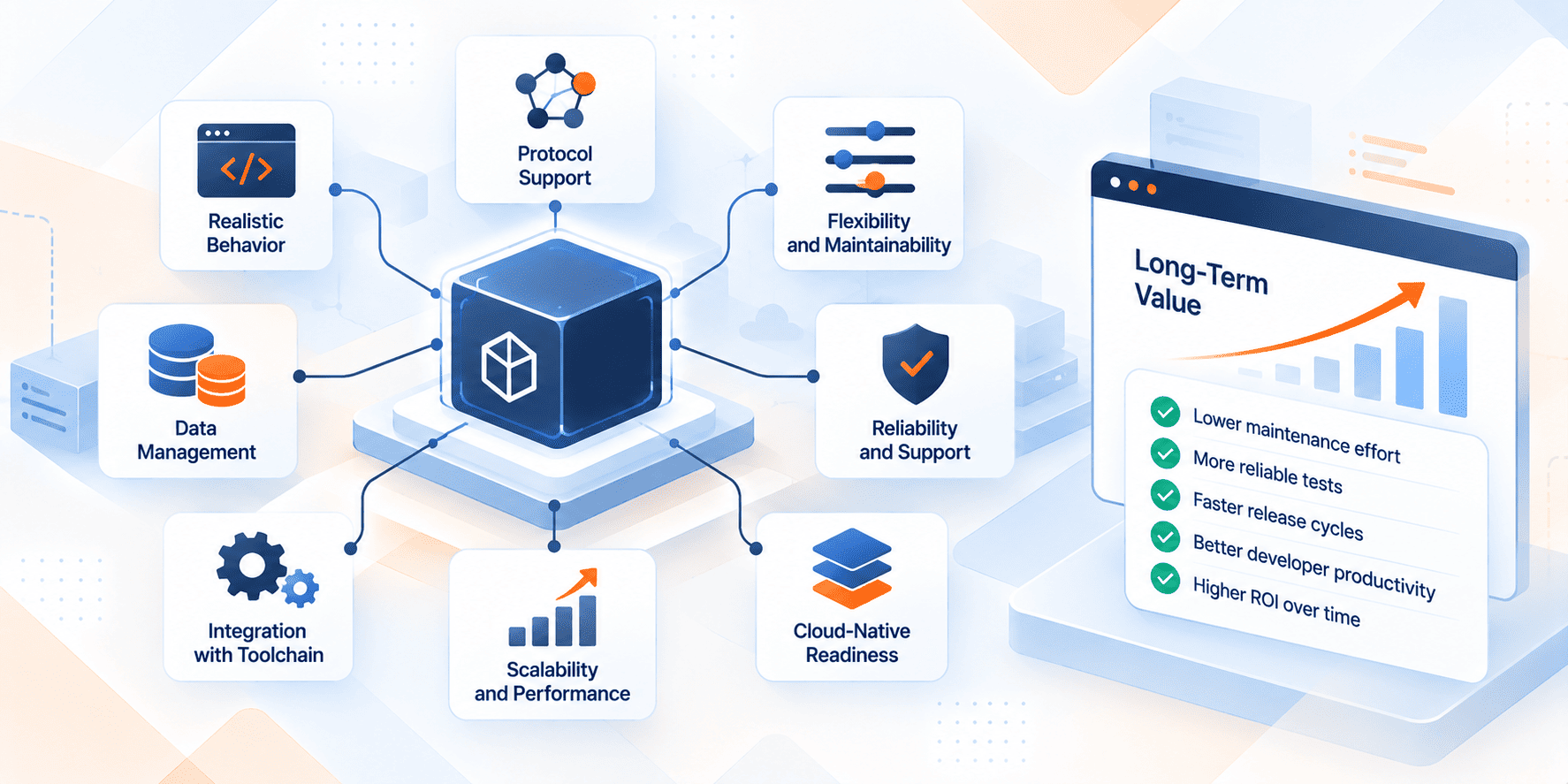
The teams that get reliable results from API regression testing treat simulation accuracy as a first-class concern, not a setup-once detail. Re-recording after upstream changes is a routine step in the deployment process, not something that happens reactively after a production failure prompts an investigation.
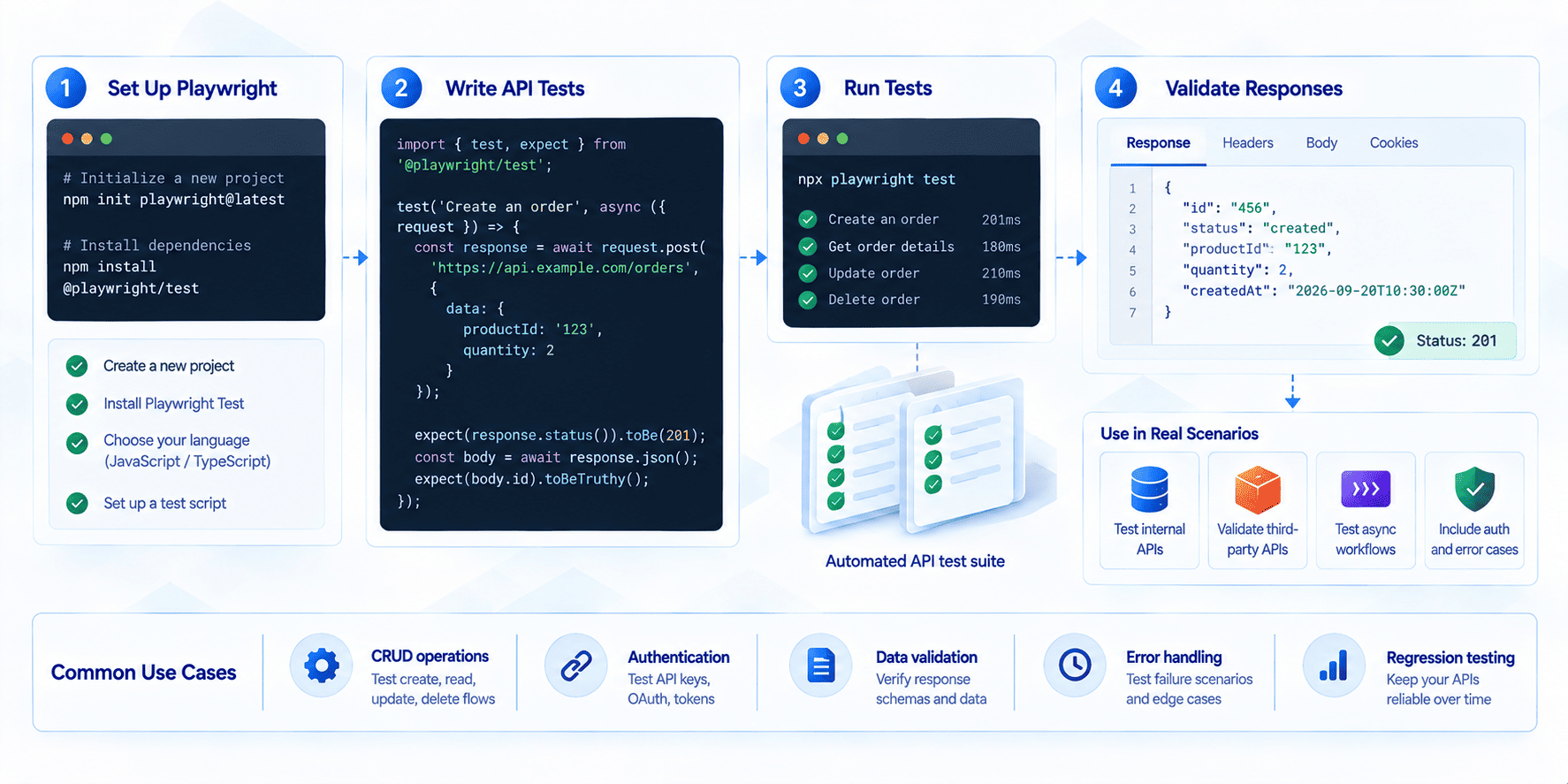
Regression testing at the API layer can genuinely catch breaking changes before they reach users. A renamed field, a restructured error response, a new required parameter: all of these are catchable if the simulation reflects current upstream behavior and the test suite runs on every pull request.
What it can't do on its own is keep the simulation current. That requires either a deliberate manual process or tooling that makes re-recording low-friction enough that it happens consistently rather than only when something has already broken.
The suite being green is only meaningful if what the suite is running against reflects how the system actually behaves. At the API layer, maintaining that connection between the simulation and reality is the part that regression testing methodology doesn't solve by itself. Tooling can.
About the author
- I’m Sophie Lane, passionate about simplifying API testing, test automation, regression testing, and enhancing the overall developer experience. I'm a strong advocate for open-source innovation, DevOps best practices, and smarter, more efficient testing workflows.
Comments
Join the discussionNo comments yet. Be the first to comment.