Getting White Box Coverage From Black Box API Tests
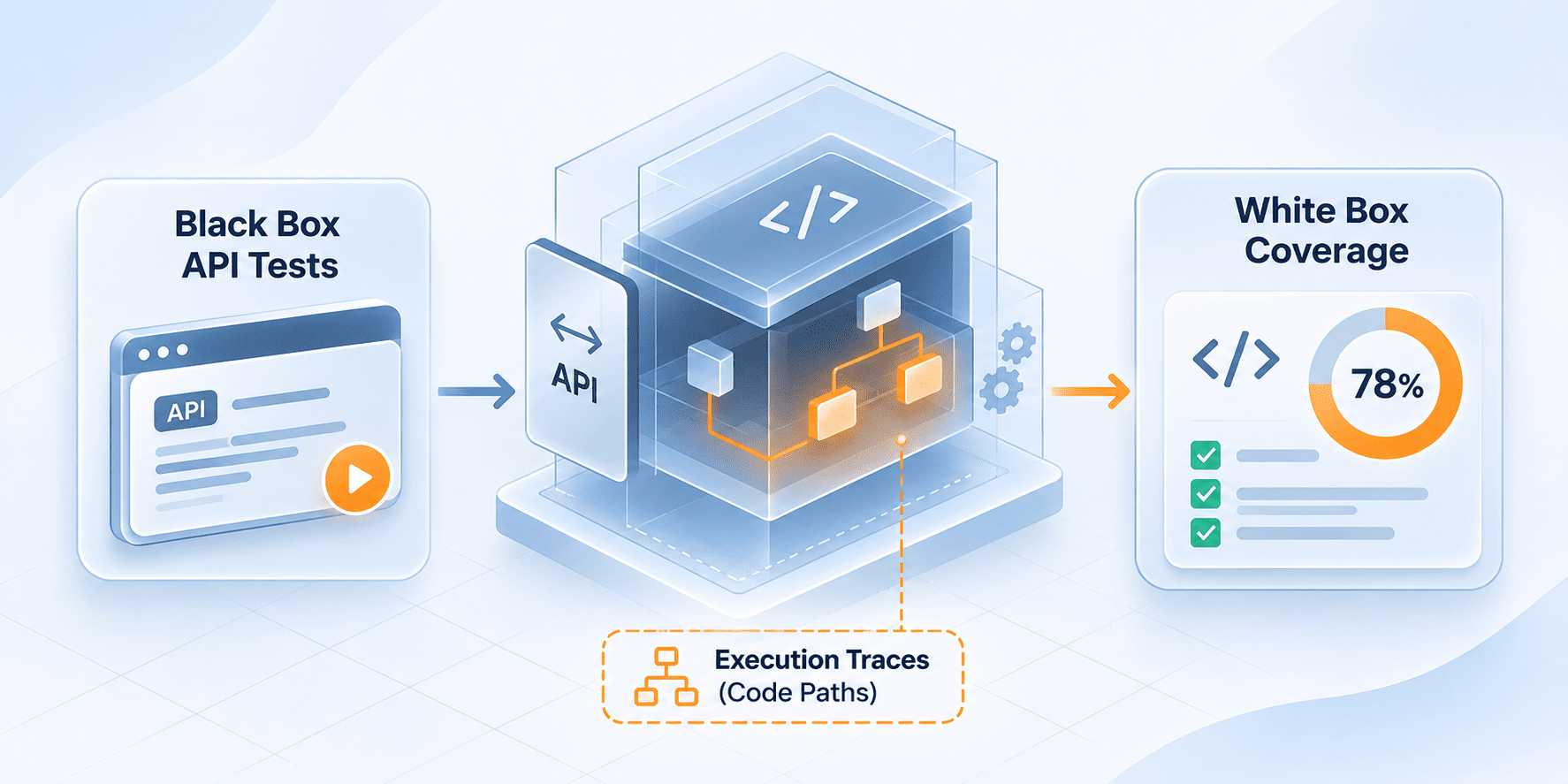
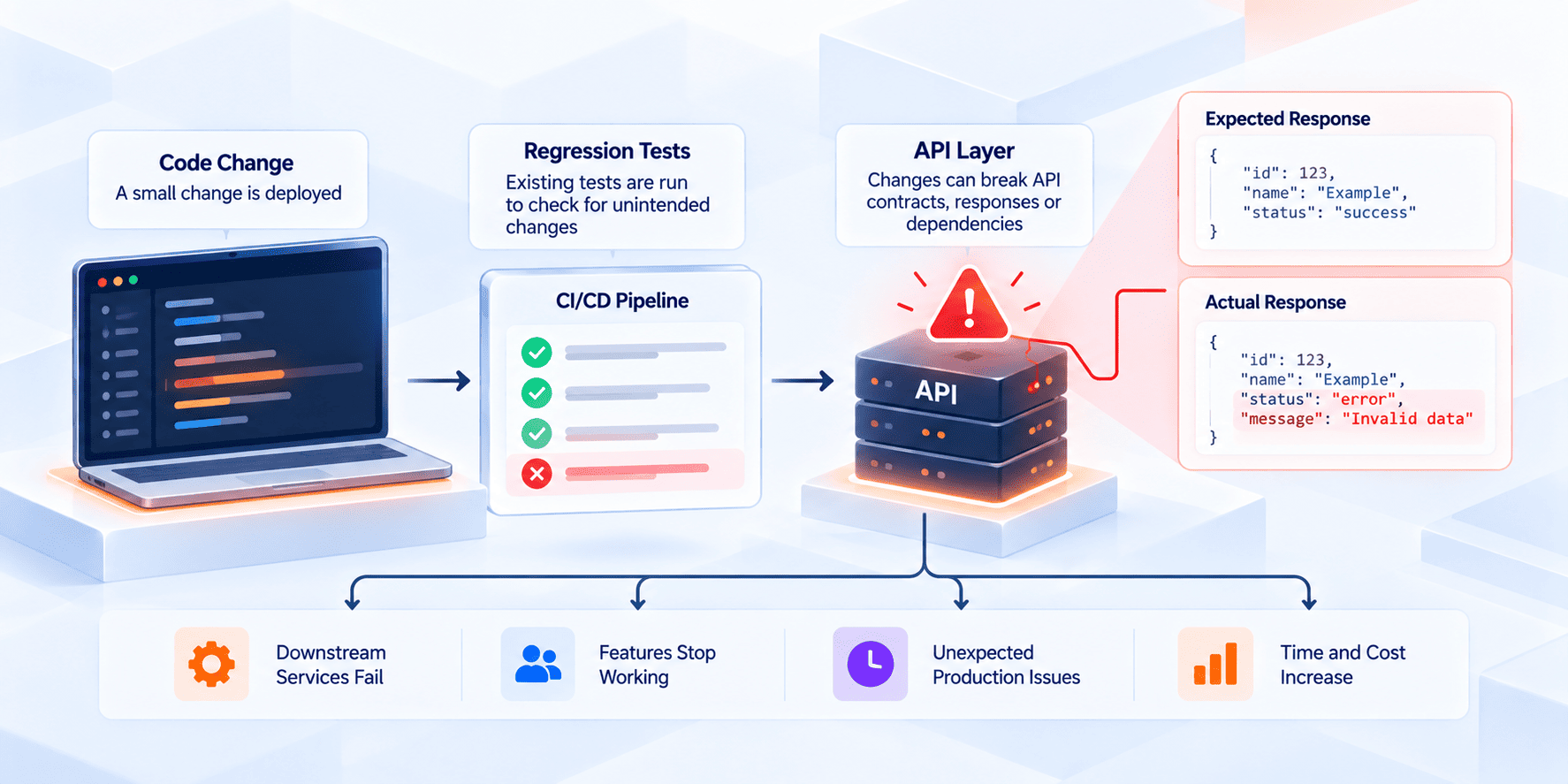
A team can have hundreds of API tests passing in CI and still not be able to answer a pretty basic question: how much of the service did those tests actually touch? The tests send requests, check responses, go green. Whether they ran through the refund logic, the retry branch or the code that handles expired tokens, nobody can say.
That gap exists because API tests are black box by nature. They watch from outside and never look in. The fix doesn’t involve rewriting them. It involves switching on a second view while they run, one that shows what happened inside the service as those outside-in requests went through it.
Two views of the same test run
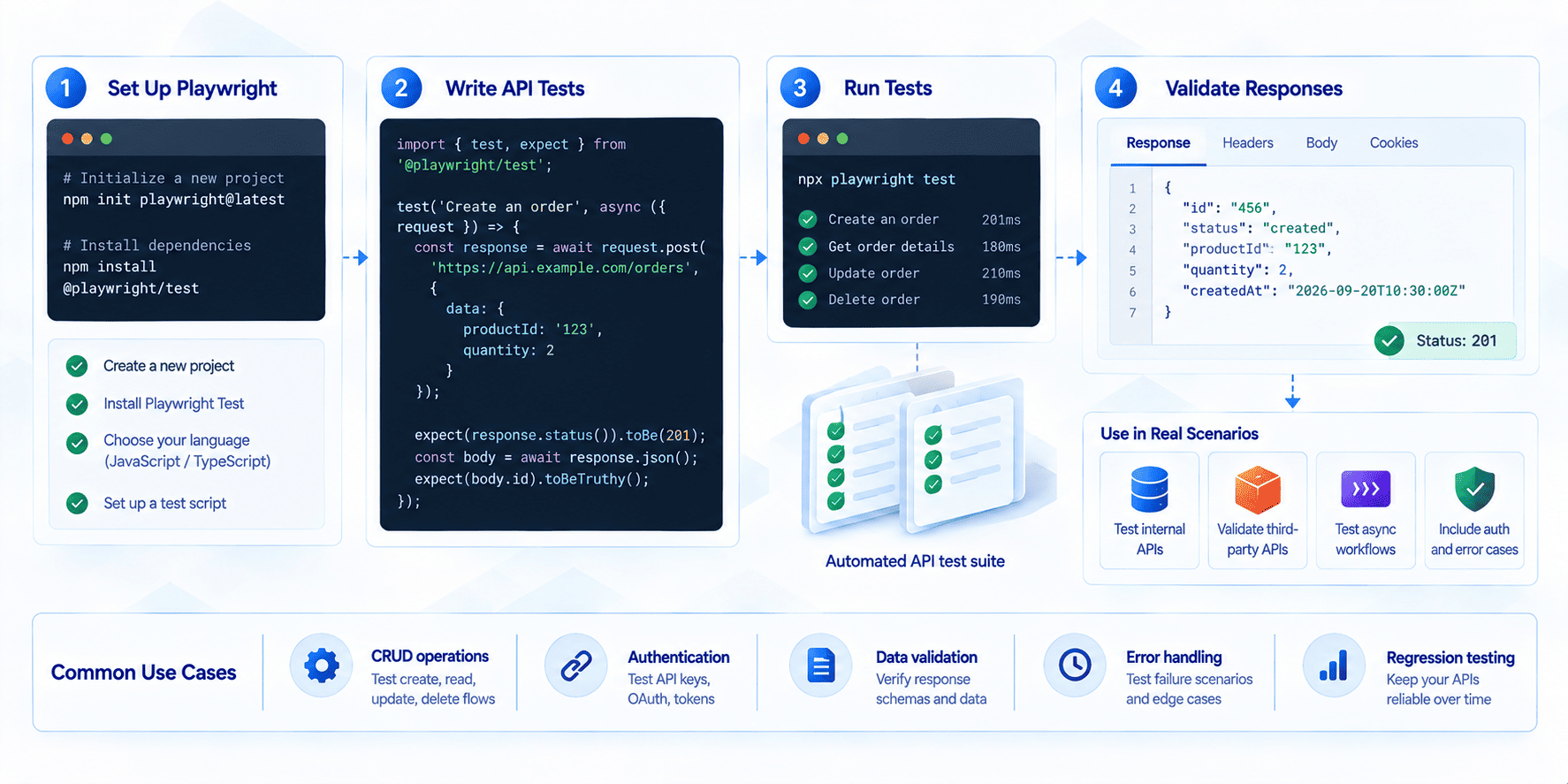
Black box testing judges software by behavior. Requests go in, responses come out, and the test decides whether those responses match what was promised. It needs no knowledge of the code at all, which is exactly why it suits API testing so well.
White box testing in software testing works from the opposite direction. It uses full knowledge of the code to see which lines ran, which branches got taken and which decisions went both ways. Most of the time it’s associated with tests written by developers who know the internals, but the coverage it measures doesn’t actually care who wrote the tests or how.
That’s the useful bit. Coverage tools only watch the code while it runs. They don’t care whether the traffic driving it came from a hand-written check, a scripted API suite or a replay of real requests. So a perfectly black box test, run against an instrumented service, produces a perfectly good white box report.
Why bother measuring from the outside
API tests tend to reach code that smaller, inside-the-codebase tests skip. Routing, middleware, serialization, auth checks, the glue between modules. A request hitting a real running service passes through all of it. Measuring coverage during those runs shows how much of that integration path is actually exercised.
It also keeps the two kinds of testing honest with each other. A black box suite can look thorough while quietly hitting the same few happy paths over and over. Coverage makes that visible. On the other side, plenty of code that looks well covered by developer tests turns out never to run in realistic request flows at all.
Switching on coverage in a running service
The mechanics depend on the language, though the idea stays the same everywhere: run a build of the service that records coverage while it serves requests.
Go can build a whole binary with coverage turned on, and it writes the data to a folder when the program stops. Java services usually get the JaCoCo agent attached at startup, and coverage can be pulled out on demand. Python services can run under coverage.py. Node will write coverage data if its built-in coverage environment variable points at a directory, and tools like c8 turn that into readable reports.
That instrumented build goes into a test environment rather than production, since coverage tracking adds overhead. Then the black box tests run against it, exactly as they normally would.
Driving it with realistic black box tests
What runs against the service matters a lot. A handful of happy-path checks will produce a coverage report that mostly says “nothing much ran.” Realistic traffic says a lot more.
Replaying real API traffic is one of the most effective ways to get there, since it carries the odd parameters, partial payloads and unusual sequences that scripted suites rarely include. Keploy works well for this, as it generates black box API tests from recorded real traffic, without needing the source code, and reports statement and branch coverage for those replayed runs, so the black box tests and the white box view come out of the same run.
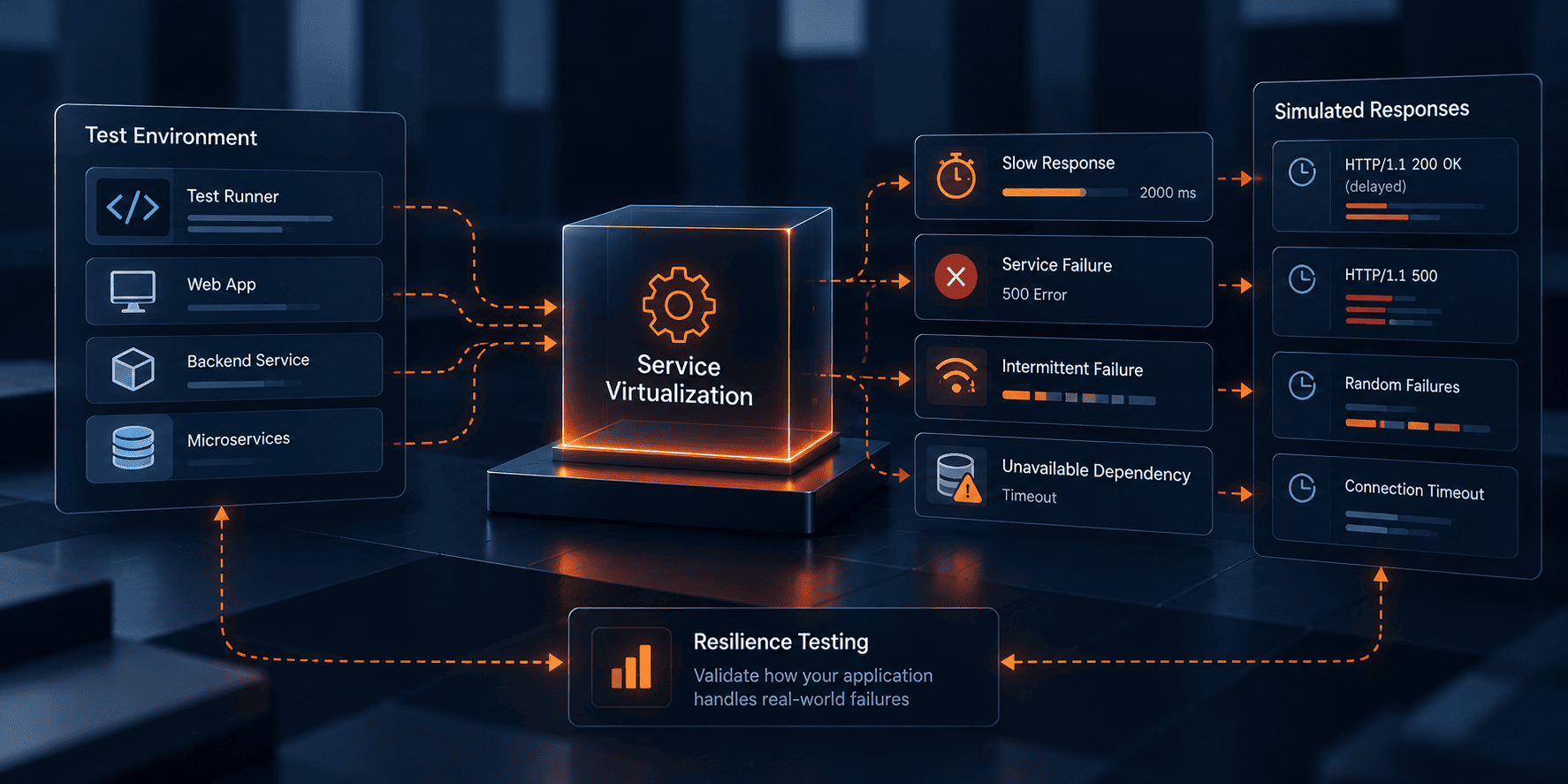
Dependencies deserve some thought here too. If the service talks to a live database or third-party APIs during the run, coverage can shift between runs just because those systems behaved differently. Serving those calls from recordings keeps two runs comparable.
Reading what the report tells you
The first thing most teams notice is how much code never ran. Some of it’s harmless, like admin endpoints nobody hit during the run or features behind flags that were switched off. Some of it’s worth a closer look, especially error handling. Timeouts, retries and fallbacks often stay completely dark, because realistic traffic is mostly successful traffic.
Branches deserve more attention than lines. A function can show every line covered while one side of an important condition never executed. Branch coverage exposes that, and those uncovered branches usually make the best list of tests to add next.
One caution, though. Covered doesn’t mean checked. A branch that ran during a black box test only got verified if the test actually looked at the part of the response that branch affects. Coverage tells you code was exercised. Your assertions decide whether its behavior was confirmed.
Merging with the rest of your coverage
Most teams already measure coverage for some tests during the build. Coverage tools can usually merge reports from separate runs, so the coverage from black box API runs can sit alongside it in one combined view.
That combined report is where things get genuinely useful. Code covered by both kinds of tests is well protected. Code covered only by API runs shows integration paths nothing else checks. And code covered by neither is the clearest list of risk you’re likely to get from any tool.
Conclusion
Black box API tests and white box coverage aren’t competing ideas. One describes how the service behaves for the people and systems calling it, and the other shows which code that behavior actually came from. Running them together turns a pile of passing API tests into something you can measure.
The first report usually settles a few long-running arguments. Teams that assumed their API suite reached everywhere see exactly where it doesn’t, and teams that trusted their developer tests see which code real requests never bother to touch.
About the author
- I’m Sophie Lane, passionate about simplifying API testing, test automation, regression testing, and enhancing the overall developer experience. I'm a strong advocate for open-source innovation, DevOps best practices, and smarter, more efficient testing workflows.
Comments
Join the discussionNo comments yet. Be the first to comment.